
Kanji Stroke Order Guide (Learn How to Write Kanji Correctly)
Learning kanji is not just about memorizing meaning and reading—you also need to understand how to write them correctly. Stroke order is an essential part of writing kanji and plays a crucial role in readability and recognition.
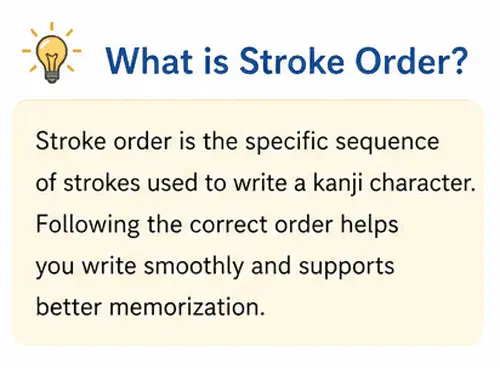
Japanese writing follows specific stroke order rules that help maintain consistency and structure. By following these rules, you can write kanji more neatly and remember them more easily.
Many beginners ignore stroke order, but this can lead to confusion and poor handwriting. Learning the correct order from the beginning will save you time and improve your learning efficiency.
Basic Stroke Order Rules
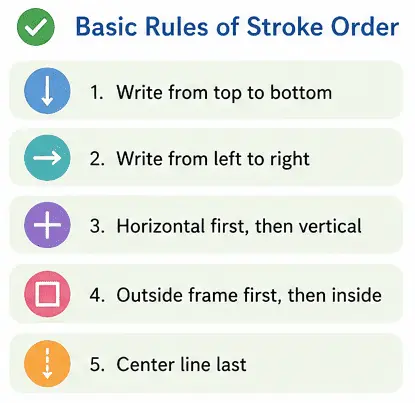
1. Top to bottom
2. Left to right
3. Horizontal before vertical
4. Outside before inside
Example Kanji
Understanding kanji stroke order becomes much easier when you look at simple, familiar examples. Basic kanji such as 山 (mountain) and 川 (river) are perfect starting points because they clearly show how strokes are structured and organized.
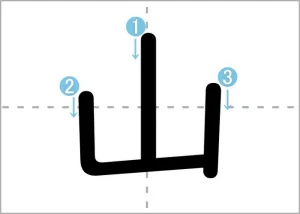
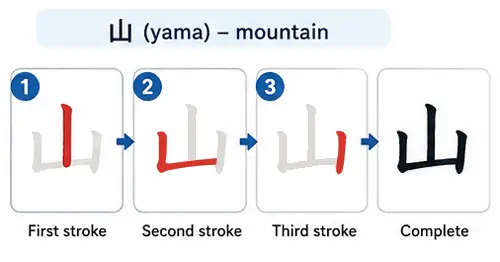
For example, the kanji 山 (やま / yama) consists of three vertical strokes. The correct stroke order starts from the vertical line in the center, starting high and finishing with a small hook to the left (or just straight down depending on the font), a left-side stroke starting with a vertical line that turns into a sharp vertical drop, then the right-side stroke starting with a shorter vertical line that ends with a straight down vertical line.
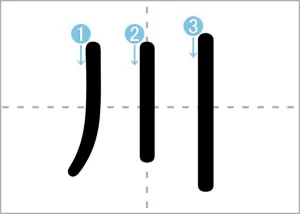
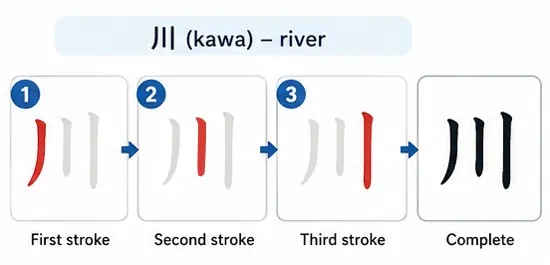
Meanwhile, 川 (かわ / kawa) also has three strokes, but they are written from left to right in parallel lines. This demonstrates another important principle: maintaining spacing and alignment between strokes.
By practicing these simple kanji, learners can build a strong foundation before moving on to more complex characters. Stroke order is not just about writing neatly—it also helps your brain recognize patterns, making it easier to memorize kanji over time.
As you continue learning, try to observe how each kanji is constructed. Many complex kanji are combinations of simpler ones, so mastering the basics will significantly speed up your progress.
| Kanji | Reading | English | Indonesian |
|---|---|---|---|
山 | やま (yama) | mountain | gunung |
川 | かわ (kawa) | river | sungai |
木 | き (ki) | tree | pohon |
林 | はやし (hayashi) | woods | hutan kecil |
森 | もり (mori) | forest | hutan |
日 | にち (nichi) | day | hari |
月 | げつ (getsu) | month | bulan |
火 | ひ (hi) | fire | api |
水 | みず (mizu) | water | air |
土 | つち (tsuchi) | earth | tanah |
人 | ひと (hito) | person | orang |
口 | くち (kuchi) | mouth | mulut |
目 | め (me) | eye | mata |
耳 | みみ (mimi) | ear | telinga |
手 | て (te) | hand | tangan |
足 | あし (ashi) | foot | kaki |
力 | ちから (chikara) | power | kekuatan |
女 | おんな (onna) | woman | wanita |
男 | おとこ (otoko) | man | pria |
子 | こ (ko) | child | anak |
上 | うえ (ue) | up | atas |
下 | した (shita) | down | bawah |
左 | ひだり (hidari) | left | kiri |
右 | みぎ (migi) | right | kanan |
中 | なか (naka) | inside | dalam |
外 | そと (soto) | outside | luar |
大 | おお (oo) | big | besar |
小 | ちい (chii) | small | kecil |
早 | はやい (hayai) | early | cepat |
長 | ながい (nagai) | long | panjang |
高 | たかい (takai) | high | tinggi |
低 | ひくい (hikui) | low | rendah |
新 | あたらしい (atarashii) | new | baru |
古 | ふるい (furui) | old | lama |
明 | あかるい (akarui) | bright | terang |
暗 | くらい (kurai) | dark | gelap |
白 | しろ (shiro) | white | putih |
黒 | くろ (kuro) | black | hitam |
赤 | あか (aka) | red | merah |
青 | あお (ao) | blue | biru |
金 | きん (kin) | gold / money | emas / uang |
土 | つち (tsuchi) | earth | tanah |
雨 | あめ (ame) | rain | hujan |
天 | てん (ten) | sky/heaven | langit |
気 | き (ki) | energy | energi |
風 | かぜ (kaze) | wind | angin |
電 | でん (den) | electric | listrik |
空 | そら (sora) | sky | langit |
海 | うみ (umi) | sea | laut |
湖 | みずうみ (mizuumi) | lake | danau |
石 | いし (ishi) | stone | batu |
岩 | いわ (iwa) | rock | batu besar |
花 | はな (hana) | flower | bunga |
草 | くさ (kusa) | grass | rumput |
虫 | むし (mushi) | insect | serangga |
犬 | いぬ (inu) | dog | anjing |
猫 | ねこ (neko) | cat | kucing |
鳥 | とり (tori) | bird | burung |
魚 | さかな (sakana) | fish | ikan |
牛 | うし (ushi) | cow | sapi |
馬 | うま (uma) | horse | kuda |
羊 | ひつじ (hitsuji) | sheep | domba |
豚 | ぶた (buta) | pig | babi |
鳥 | とり (tori) | bird | burung |
米 | こめ (kome) | rice | beras |
麦 | むぎ (mugi) | wheat | gandum |
茶 | ちゃ (cha) | tea | teh |
酒 | さけ (sake) | alcohol | alkohol |
肉 | にく (niku) | meat | daging |
卵 | たまご (tamago) | egg | telur |
牛乳 | ぎゅうにゅう (gyuunyuu) | milk | susu |
水道 | すいどう (suidou) | water supply | air ledeng |
花火 | はなび (hanabi) | fireworks | kembang api |
風船 | ふうせん (fuusen) | balloon | balon |
時計 | とけい (tokei) | clock | jam |
電話 | でんわ (denwa) | phone | telepon |
電車 | でんしゃ (densha) | train | kereta |
飛行機 | ひこうき (hikouki) | airplane | pesawat |
学校 | がっこう (gakkou) | school | sekolah |
先生 | せんせい (sensei) | teacher | guru |
本 | ほん (hon) | book | buku |
文 | ぶん (bun) | sentence | kalimat |
字 | じ (ji) | character | huruf |
語 | ご (go) | language | bahasa |
話 | はなす (hanasu) | speak | berbicara |
読 | よむ (yomu) | read | membaca |
書 | かく (kaku) | write | menulis |
聞 | きく (kiku) | listen | mendengar |
行 | いく (iku) | go | pergi |
来 | くる (kuru) | come | datang |
帰 | かえる (kaeru) | return | pulang |
入 | はいる (hairu) | enter | masuk |
出 | でる (deru) | exit | keluar |
買 | かう (kau) | buy | membeli |
売 | うる (uru) | sell | menjual |
立 | たつ (tatsu) | stand | berdiri |
座 | すわる (suwaru) | sit | duduk |
休 | やすむ (yasumu) | rest | istirahat |
働 | はたらく (hataraku) | work | bekerja |
住 | すむ (sumu) | live | tinggal |
Practice More Kanji
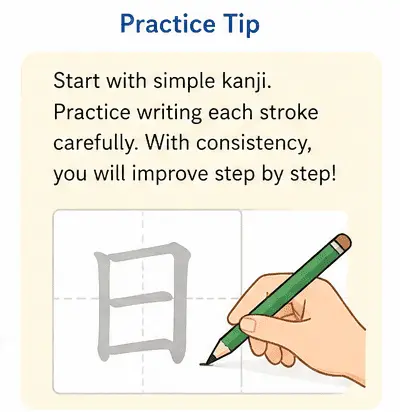
Want to master more kanji? Check out our Beginner Kanji PDF and Most Common Kanji List.
Why Stroke Order Matters
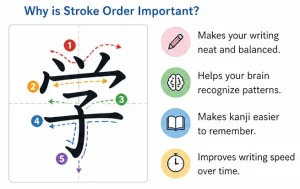
Correct stroke order improves writing speed, accuracy, and memorization. It also helps when using handwriting recognition tools.
Learn more: Basic Kanji Guide